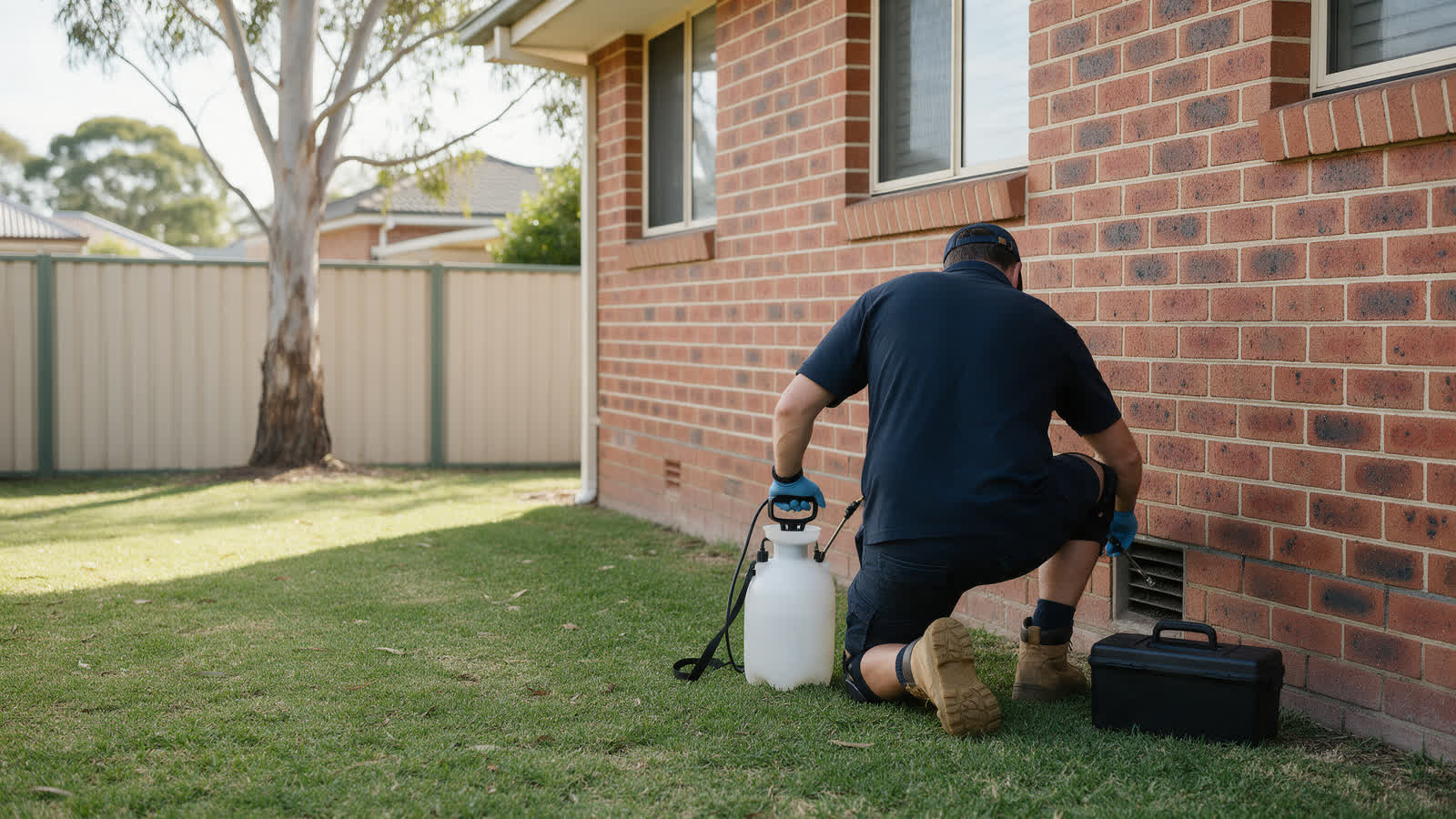
In NSW, pest control treatment records must be made within 48 hours of every pesticide application and kept for three years. The record covers the product, where and how it was used, the rate and quantity, the equipment, the property, the date and time, who applied it and who manages the property, and the weather for outdoor spraying. That's the rule under the Pesticides Regulation 2017, set out in the EPA's fact sheet for pest management technicians.
A good record does more than keep the EPA happy. It settles "you never came in July", it books the next treatment, and it turns into the service report your customer keeps. This guide covers what to write down, when, and how to make it part of the job instead of a Friday-night chore.
Who has to keep records
If you use pesticides or do pest control as part of your job in NSW, you must keep a record of every pesticide application. The EPA lists two exceptions:
- treating water in a swimming pool or spa
- non-chemical control, such as physical termite barriers or traps
Everything else counts: an internal general spray, a termite treatment, a bait station refill, rodent baiting in a roof void.
Other states and territories run their own rules through their own regulators. If you work across a border, check the requirements in each state you treat in.
What the record must include
Record within 48 hours, keep for 3 years
The product.
The full product name of the pesticide.
How it was used.
The situation, the rate of application and the quantity applied.
The equipment.
A description of what you applied it with.
Where.
The property address and the area of the property you treated.
When.
The date and the time of the application.
Who.
Name, address and contact details of the person who applied it, and of the owner or the person who manages the property.
The weather.
For outdoor spraying through the air: wind speed and any other relevant conditions.
You don't have to record the target pest, but write it down anyway. "Internal general, German cockroach, kitchen and laundry" tells you far more next quarter than "internal general".
Penalties apply if you can't produce the records. The EPA lists on-the-spot fines of $1,000 for a corporation and $500 for an individual, with court-imposed fines of up to $44,000 for more serious offences.
Notice before you spray
Records are half of it. The other half is notice. Under the same regulation:
- Near a sensitive place. Spraying or ground-injecting liquid pesticide, or fumigating outdoors, within 20 metres of a school, preschool, childcare centre, community health centre or nursing home needs at least five working days' notice to the person in charge.
- Common areas of units and townhouses. The person arranging the treatment needs the details so residents get five working days' notice, and notices go up at the entry and exit points on the day.
- Emergencies. Wasps, bees, venomous spiders, rodents or bird mites posing an immediate risk don't need the five days, but you still give notice before you start and record the circumstances.
The EPA's pesticides pages have the detail, including what a notice must contain.
Make the record on site, not on Friday
The records that cause trouble are the ones written days later from memory. Write it while you're still at the property:
- Take before and after photos of the areas you treated and the bait stations you checked.
- Tick off a checklist you wrote once for each kind of treatment, with product, rate and quantity as steps.
- Note anything the next tech needs to know: dog in the yard, side gate code, termite activity in the meter box.
- Get the customer's signature on a completion report before you drive off.
A record made on site is accurate, it's inside the 48 hours without trying, and it's evidence. When a customer disputes a visit, a dated record with photos ends the conversation.
The notebook in the ute
- Treatment notes written up at the end of the week
- Photos somewhere in your camera roll
- The follow-up treatment depends on someone remembering
- "You never came in July" is your word against theirs
With Galaxera
- Notes, photos and checklist on the job while you're on site
- A completion report with photos, signed on the customer's phone
- A service reminder texts the customer when the next one is due
- Arrival and departure stamped with time and location
From record to service report
The customer doesn't need your full EPA record, but they want proof of what was done. A good service report has:
- the date, the address and the tech's name and licence number
- what was treated and where, in plain words
- the product used and any re-entry or safety instructions
- before and after photos
- when the next treatment or inspection is due
- the customer's signature
Send it the same day. Property managers in particular keep these, and the business that sends a clean report every time is the one they keep using.
Book the next one before you leave
Most pest control revenue comes back around: quarterly generals, annual termite inspections, the follow-up on a treatment. Those jobs vanish if nobody books them. Set the reminder on the day you do the first treatment, so the customer hears from you when the next one is due without anyone writing it in a diary.
Where Galaxera fits
The short version
In NSW, record every pesticide application within 48 hours and keep it for three years: product, situation, rate and quantity, equipment, address and area, date and time, who applied it and who manages the property, and the weather for outdoor spraying. Give notice near sensitive places and in shared complexes. Make the record on site with photos and a checklist, turn it into a signed service report, and book the next treatment before you leave.
This is general information, not legal advice. Check the current requirements with the NSW EPA or your state's regulator.
Questions
Three years. The record must be made within 48 hours of the application, under the Pesticides Regulation 2017.
No, the EPA says the target pest isn't required. It's still worth writing down, because it tells you and the next technician what the treatment was for.
No. The EPA's record-keeping rule doesn't apply to non-chemical control such as physical termite barriers or traps.
The treatment record is what the regulation requires you to keep. The service report is what you give the customer: what was done, where, the product and safety instructions, photos, the next due date and their signature.