Here's how to start a lawn mowing business in Australia: get an ABN, take out public liability insurance, buy a commercial mower, a trimmer, a blower and a trailer to carry them, work out a price per mow from your own costs, and build a run of regular customers close together. You can start on weekends while you still have a job, and plenty of operators do.
The gear is the easy part. The money is in two things people don't think about until later: how many mows you fit into a day without driving across town, and what you do in winter when the grass stops growing. This guide covers the setup, then both of those.
What do you need to start a lawn mowing business?
You need an ABN, public liability insurance, a commercial mower, a line trimmer, a blower, a trailer or a vehicle that fits the gear, and a way to get rid of green waste. Then a price per mow worked out from your own costs, and a way to book customers and send invoices. A business name and GST registration come in when your situation calls for them.
- ABN, applied for free through the Australian Business Register
- Business name registered with ASIC, if you trade under anything other than your own name
- Public liability insurance, with a certificate of currency you can send
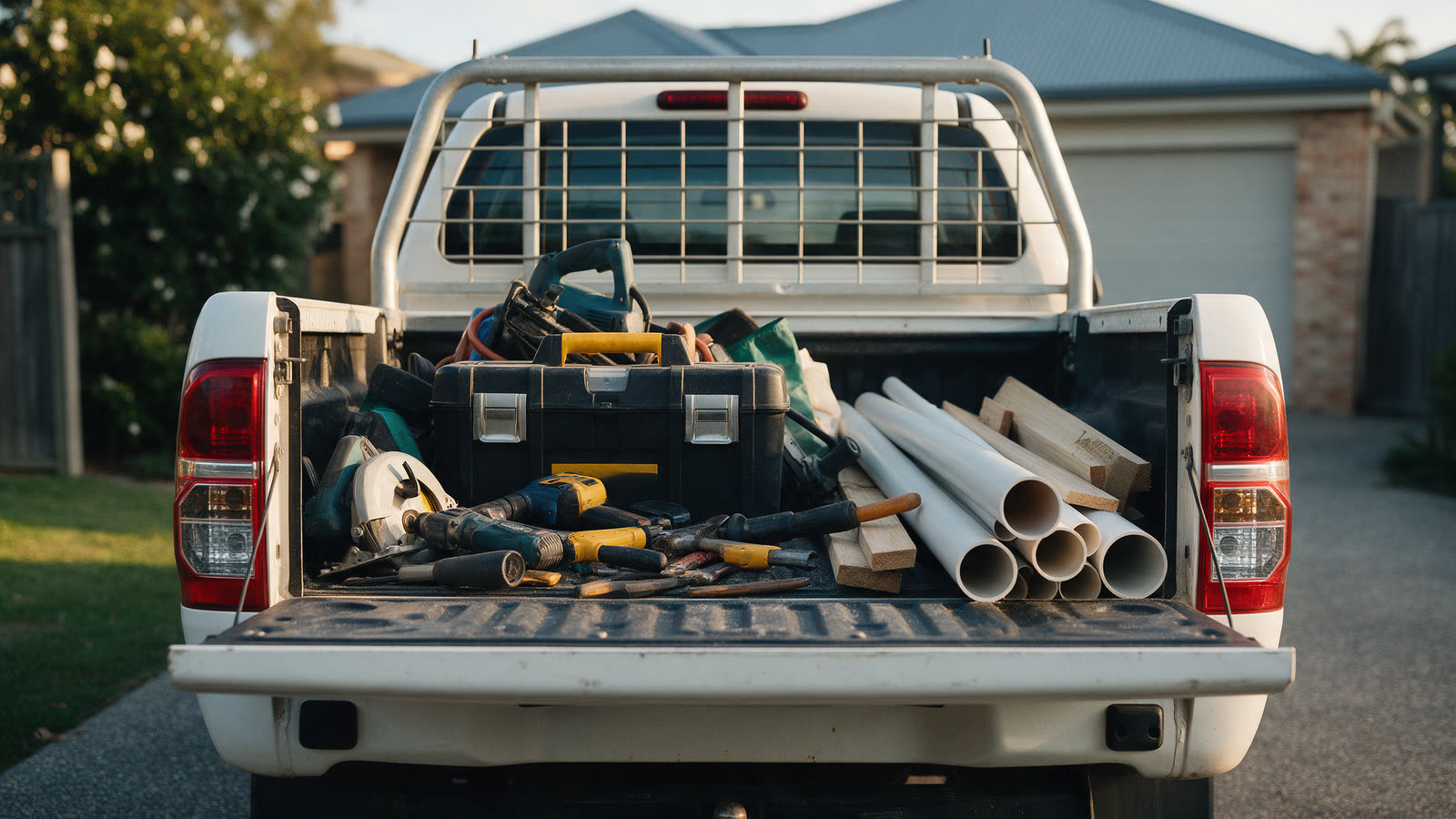
- Mower, trimmer, blower and edger, plus spare line, blades and fuel cans
- A registered trailer, and a car rated to tow it loaded
- A plan for green waste: bags to the tip, a tip account, or a bin at home
- A price per mow worked out from your costs, not a competitor's flyer
- A way to send invoices with your ABN on them, and take payment
- Ear muffs, safety glasses, boots, gloves and sun protection
Do you need an ABN, a licence or insurance to mow lawns?
You need an ABN, and it's free. Mowing itself doesn't usually need a trade licence. You should have public liability insurance before your first paid mow, because a stone thrown from a mower can break a window or a car windscreen, and those claims land on you. If you spray weeds for pay, check your state's rules, because commercial pesticide use can need its own licence.
Apply for your ABN on the Australian Business Register. business.gov.au explains how to register for an ABN and when you need to register a business name through ASIC. If you call yourself "Smith's Mowing" rather than just your own name, that's a business name, and it has to be registered.
For insurance, business.gov.au lists the main types of business insurance. Public liability is the one customers, real estate agents and strata managers ask about. Cover for your gear is worth pricing too, because a trailer full of equipment parked outside overnight is an easy target.
On weed spraying: rules vary by state. In NSW, for example, the EPA has licences for people who use pesticides as part of their work. Check yours before you add spraying to your flyer.
What gear do you need, and do you need a trailer?
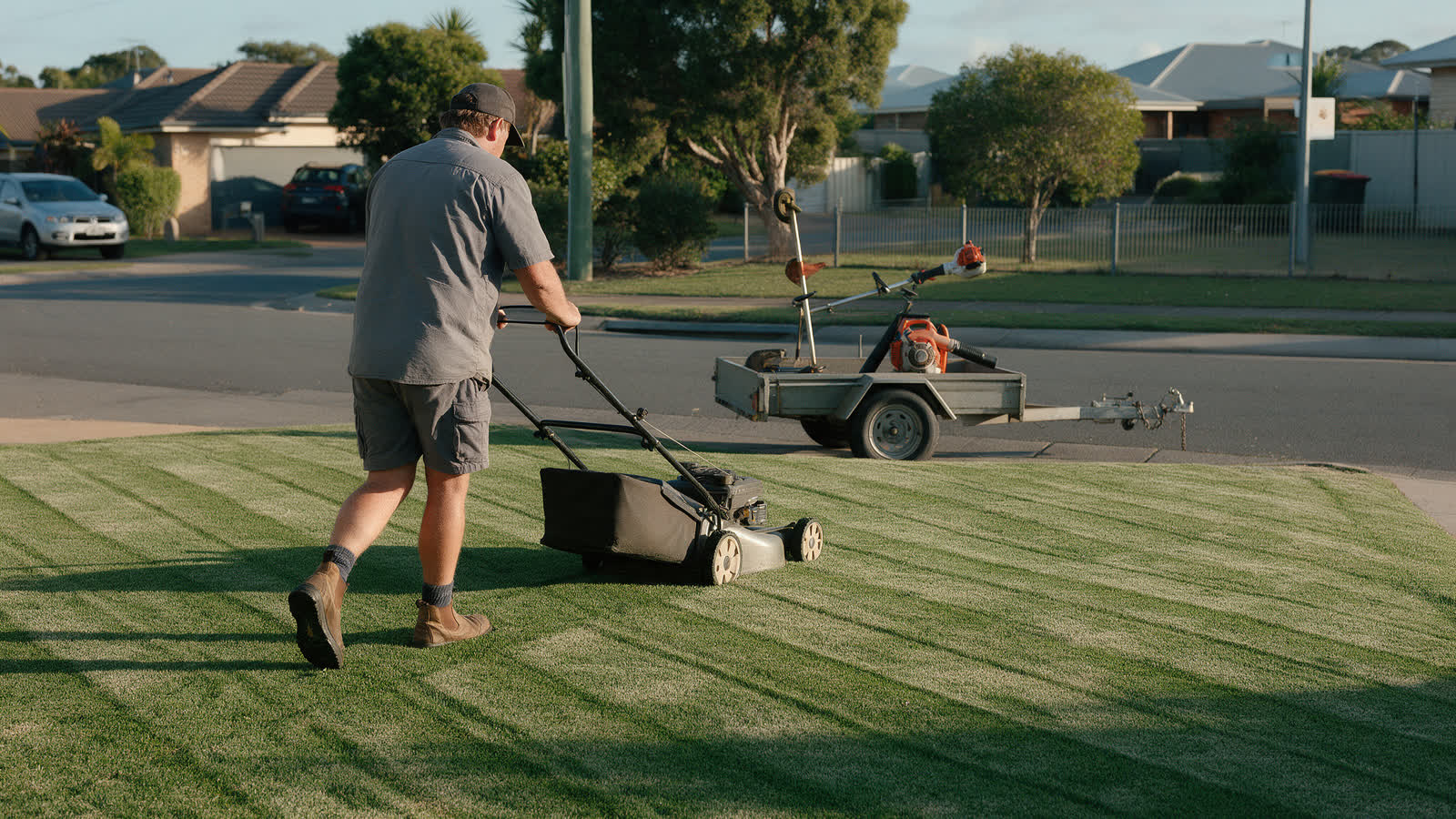
Buy a commercial-grade mower, a line trimmer, a blower and an edger to start, and add a hedge trimmer before your first winter. A trailer is worth it as soon as you have more than a few customers, because it carries the mower, the green waste and the fuel without wrecking your car. Buy for reliability. A mower that won't start costs you a day of mows.
| Gear | What it's for | What to think about |
|---|---|---|
| Mower with a catcher | The main job | Commercial-grade, a cutting width that suits the blocks you'll mow, easy to service |
| Line trimmer | Edges, fence lines, around trees | Comfortable to carry for hours, spare line in the trailer |
| Blower | Paths and driveways at the end | Clean paths are what the customer actually sees |
| Edger | Clean lines along paths and kerbs | Turns a mow into a tidy job |
| Hedge trimmer | Hedges, and winter work | Pays for itself when the grass slows down |
| Trailer | Carrying it all, plus green waste | Registered, with a cage, a ramp, tie-downs and a lock |
| Spares and fuel | Keeping the day going | Blades, line, a sharpening kit, two fuel cans, oil |
Keep the blades sharp. A blunt blade tears the grass and the lawn goes brown at the tips a few days later, which the customer notices even if they can't tell you why.
How do you price a lawn mow?
Price each mow by the time it takes you, not by a flat figure you saw on a flyer. Time the job on site, add a share of the driving to get there, multiply by your own rate per minute, and add green waste disposal. Your rate per minute comes from your hourly rate, which has to cover your pay, the gear, fuel, insurance and the hours you don't get paid for.
Price a mow from your own numbers
Work out your hourly rate.
Your yearly pay plus yearly costs, divided by the hours you'll actually spend mowing. Then add profit.
Turn it into a rate per minute.
Divide the hourly rate by 60.
Time the block.
Minutes on site for that yard: mowing, trimming, edging and blowing, front and back.
Add travel.
The minutes from your last job to this one. In a tight run this is small.
Add green waste.
Your tip fee or disposal cost for that yard's clippings.
Put it together.
Minutes on site plus travel minutes, times your rate per minute, plus green waste.
Here's how the sum works, with made-up numbers you should swap for your own. Say your rate works out at $72 an hour. That's $1.20 a minute. A front and back yard takes you 35 minutes, and it's 10 minutes from the last job, so 45 minutes in all. 45 times $1.20 is $54. Add $6 for green waste and the mow is $60.
The rate is the part most new operators get wrong, because they forget the hours that don't earn: driving, sharpening blades, the tip run, fixing the mower, answering the phone. How to price a job walks through the whole hourly rate sum.
What adds time to a mow
| What you see | Why it costs time |
|---|---|
| Steep slopes or terraces | Slower, harder going, sometimes a second mower |
| Lots of garden beds and trees | More trimming and edging than mowing |
| Back yard access through a narrow side gate | Mower and catcher carried in and out |
| Long grass after rain or a missed visit | Two passes and more catcher trips |
| Dogs, and what dogs leave | Waiting, and a pick-up before you start |
| A big front yard on a corner block | Two street frontages to edge |
When someone asks for a price, look at the yard first, or ask for photos of the front and back. Put the price in writing. A quote that says what's included, like mowing, edging, trimming, blowing and taking clippings, stops the argument about whether the nature strip was part of it. How to quote a job covers what a written quote should say.
How do you build a mowing run that pays?
A run pays when the mows are close together. Every minute driving between jobs is a minute you aren't paid for, so ten mows in two suburbs earn more than ten spread across the city. Give each day an area, book new customers onto the day you're already nearby, and either turn down far-flung jobs or price the extra travel into them.
- Give each weekday its own patch of suburbs, and stick to it
- Book a new customer onto the day you're already in their street
- Letterbox the streets you already mow, so new work lands on your existing run
- Put customers who are out of the way on a slot where they won't break up the day
- Keep the run order in the same sequence each week, so customers know roughly when you'll turn up
What happens to a lawn mowing business in winter?
In most of southern Australia, grass grows hard through spring and summer and slows right down in winter, so mowing income drops. Up north, the wet season is the busy one. Plan for the quiet months before they arrive: move regulars to a longer gap between mows, and fill the week with work that isn't mowing, like hedging, gutters, garden tidy-ups and green waste removal.
- Hedging and pruning. The biggest winter earner for most mowing businesses. Offer it to every regular in autumn.
- Garden tidy-ups. Weeding, cutting back, mulching beds. Good for rentals between tenants and for customers getting a place ready to sell.
- Gutter cleaning. Popular before winter rain, but only with the right ladder, safe work at heights and insurance that covers it.
- Leaf and green waste removal. Autumn leaves and the pile behind the shed.
- One-off yard clean-ups. Overgrown blocks for real estate agents and new owners.
Save some of the summer money for the winter weeks, and tell regulars in autumn how the schedule will change, so a longer gap between mows doesn't feel like you've dropped them.
How do you get your first 20 lawn mowing customers?
Your first 20 customers come from being seen in a small area. Letterbox drop the streets around every lawn you mow, set up a free Google Business Profile, post in local community Facebook groups, and tell everyone you know. Neighbours watch you mow next door, so do a tidy job and leave a flyer with the houses either side. Then ask every happy customer for a review.
- Letterbox drops. A simple flyer with your name, phone number, suburbs, what you do and a line about your insurance. Start with the ten houses each side of every lawn you mow.
- Google Business Profile. Free, and it's where "lawn mowing near me" searches land. Set your service area to the suburbs on your run. Google has a setup guide.
- Local Facebook groups. Check the rules, then post a plain before and after photo with the suburb, never the street address.
- Real estate agents. Rentals need mowing between tenants and before inspections, and agents want someone reliable.
- Reviews and referrals. Ask on the day, by text, with a direct link. A neighbour's recommendation wins more work than any flyer.
Answer the phone. Someone who rings while you're on the mower and gets voicemail will usually ring the next number. More ways to bring work in are in how to get more work as a tradie.
How do you keep regular mowing customers?
Regular customers stay when you turn up on the day you said, the job looks the same every time, and they never have to chase you. Put each regular on a set day and gap, text before you arrive so the gate's open and the dog's inside, and keep a note of anything particular about each yard. Bill on a set rhythm and review prices once a year.
Do you need to register for GST as a lawn mower?
You must register for GST once your GST turnover reaches $75,000 a year, or when you expect it to within the next 12 months. Below that, registering is optional. Once registered, you add 10 percent to your prices, issue tax invoices and lodge a BAS. A full-time run can cross that line in its first year, so keep an eye on your monthly totals from the start.
The ATO's GST registration page has the full rules. You have 21 days to register after you go over the threshold. If you price your regulars knowing GST is coming, adding it later is a much easier conversation.
When should you hire help?
Hire when your run is full for weeks ahead and you're turning customers away, not after one big spring. Start with a casual offsider for the busy months. If you employ them, the Gardening and Landscaping Services Award 2020 (MA000101) is likely to apply, so check it with Fair Work. You'll also need workers compensation insurance, super paid with each pay run, and payslips.
Read the Gardening and Landscaping Services Award on the Fair Work site and check the current pay rates before you set wages, because they usually change each 1 July. If you'd rather use subcontractors with their own ABN, check they'd really count as contractors. Fair Work and the ATO look at how the work is done, not at what the paperwork says.
A second person changes the maths. Two people on one yard isn't twice as fast, because one mows while the other trims and edges, and the gear has to stretch to two. Time a few yards as a pair before you change your prices, and think about whether the second person runs their own trailer and their own patch.
If you're starting now, get the admin right from the first customer, because it's much harder to sort out at 60 customers. Try Galaxera free for 14 days, no card needed, put in your first regulars, and send your next quote from the trailer.
Questions
Mowing itself doesn't usually need a trade licence. You need an ABN, and you should have public liability insurance. Spraying weeds for pay can need a pesticide licence in some states, so check yours first.
Time the yard, add the travel from your last job, multiply by your own rate per minute, and add green waste disposal. Your rate has to cover your pay, gear, fuel, insurance and the hours you don't get paid for.
By moving regulars to a longer gap between mows and filling the week with hedging, garden tidy-ups, gutter cleaning and green waste removal. Offer winter work to your regulars in autumn.
Letterbox the streets around every lawn you already mow, set up a free Google Business Profile, post in local Facebook groups and ask happy customers for reviews. Keep new customers inside your run.
Only once your GST turnover reaches $75,000 a year, or you expect it to within 12 months. Below that it's optional.