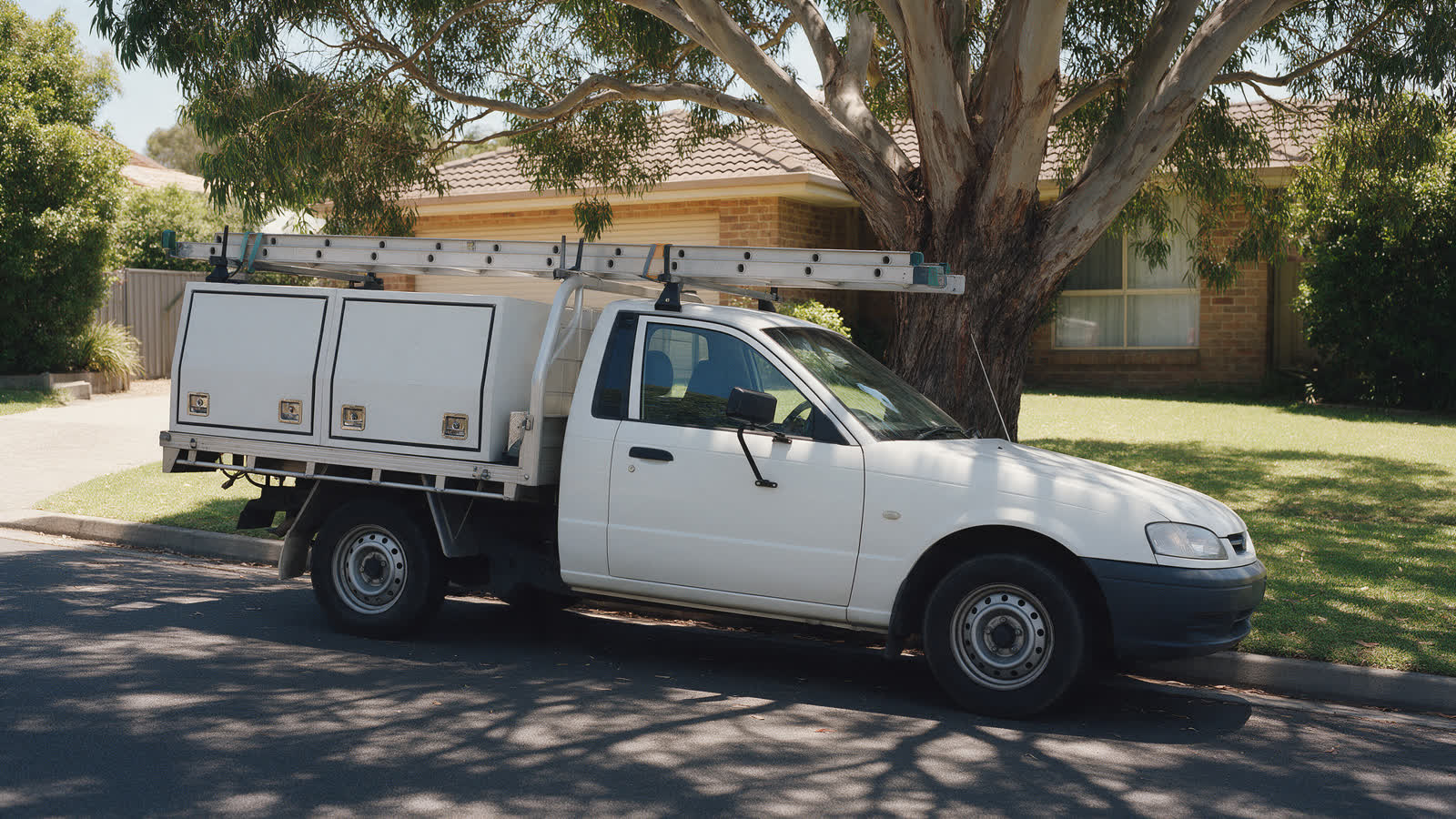
A Christmas shutdown checklist for tradies comes down to five jobs: get every invoice out and chase what's owed before you knock off, take deposits on January work, tell customers your dates, sort your staff's leave and pay, and decide who answers the phone while you're away. Then lock up the sites and tools and book January before you go.
Christmas Day 2026 is a Friday, and most trade businesses shut somewhere between the 18th and the 24th of December and come back in the first or second week of January. That's about five weeks from today. Start now and the break is a break. Leave it to the last week and you spend January waiting on money that should have landed before Christmas.
What should be on a Christmas shutdown checklist?
A Christmas shutdown checklist covers money, customers, staff, compliance and the sites. Invoice every finished job, chase what's overdue, and take deposits on January work. Tell customers your dates by email, on the phone and on your website. Sort annual leave, public holiday pay and super for staff. Note your BAS date, secure sites and tools, and fill your January diary.
Here's the full list. Tick it off over the next few weeks.
- Invoice every finished job, including the small ones you've been sitting on
- Chase every overdue invoice now, while people still have money and are reading email
- Send January quotes with a deposit on the document
- Pick your shutdown dates and tell customers by email, text and on your website
- Change your voicemail, or set up who answers calls over the break
- Give staff written notice of the shutdown and check your award's shutdown rules
- Work out pay for the public holidays and leave over the break, and when the super is due
- Note your BAS due date for October to December
- Pay suppliers or check their December trading terms
- Make every site safe, secure materials and get tools out of the ute
- Book your first two weeks of January before you knock off
How do you get paid before Christmas?
Invoice every finished job the day it's done, and chase overdue invoices from now, not the week before Christmas. Customers spend on presents, then go away. An invoice sent on 22 December often isn't looked at until mid-January. Getting your money in by the second week of December is what carries the business through a quiet January.
Work out your own gap. Add up what's owed to you today. Then add up what goes out between now and the end of January: wages and holiday pay, super, rent, the ute, insurance, supplier accounts. Say you're owed $18,400 and you've got $14,000 going out before February. If half of what's owed slips into January, you're short at exactly the time the phone is quiet. Swap in your own numbers.
Check your payment terms against the calendar. On 14-day terms, an invoice sent on 18 December falls due on 1 January, which is New Year's Day. On 7-day terms, it's due before Christmas. If you can, send your last invoices of the year with shorter terms and say so on the invoice.
Then chase. A polite reminder now works better than an awkward one on Christmas Eve. If someone's well overdue, ring them. Our guide to chasing unpaid invoices has the wording, and cash flow for tradies covers building a buffer so January doesn't hurt next year.
Should you take a deposit on January work?
Yes, for anything with materials or a big block of your time. A deposit locks the job into your January, gives the customer a reason to stick with you over the break, and covers materials you might order before Christmas. Put the deposit amount on the quote, and invoice it when the customer accepts.
A deposit paid in December also helps your cash flow at the worst time of year. Keep it straightforward: a fixed amount or a percentage of the quote, due before you book the start date. Tell the customer when it's due and what it covers. If they won't pay a deposit for a job weeks away, that tells you something about how firm the job is.
How do you tell customers your Christmas shutdown dates?
Tell them three ways, about two weeks before you close: an email or text to current and recent customers, a line on your website, and your voicemail or phone message. Give the date you close, the date you're back, what to do in an emergency, and how to book January work. Keep it short.
Here's a message you can copy. Swap in your dates and details.
Hi [first name], a quick note before Christmas. We're closed from Wednesday 23 December and back on Monday 11 January. If you'd like work booked in for January, reply to this or call [your number] and we'll lock in a time now, before the diary fills. Any invoices due before Christmas can be paid by bank transfer to the details on the invoice. Thanks for your work this year and have a good break. [Your name], [business name]
Put the same dates on your website's home page and contact page, and on your Google Business Profile, where you can set special hours for the public holidays.
What should your phone message say over the break?
Say you're closed, give the date you're back, and tell callers what happens next: leave their name, number, address and the job, and you'll ring back when you're back, or sooner for emergencies if you take them. If you don't do after-hours call-outs, say so, so nobody waits on a call that won't come.
You've reached [business name]. We're closed for Christmas from 23 December and back on 11 January. Leave your name, number, suburb and what the job is, and we'll call you back in the first week we're open. If it's an emergency, [what to do, or the number to call]. Thanks, and have a safe Christmas.
The trouble with voicemail is that plenty of people won't leave one. They ring the next business on the list. Over the break that's a January job gone before you've had a chance at it. More on that in our guide to AI receptionists for tradies.
What are the public holidays over Christmas 2026?
Christmas Day is Friday 25 December 2026. Boxing Day falls on Saturday 26 December, so most states add a public holiday on Monday 28 December. New Year's Day is Friday 1 January 2027. Tasmania observes Boxing Day itself on Monday 28 December, and South Australia calls 26 December Proclamation Day. Some states also have part-day holidays on Christmas Eve and New Year's Eve.
| State or territory | Christmas Day | Boxing Day | Part-day holidays |
|---|---|---|---|
| NSW, Victoria, WA, ACT | Fri 25 Dec | Sat 26 Dec, plus Mon 28 Dec | None |
| Queensland | Fri 25 Dec | Sat 26 Dec, plus Mon 28 Dec | Christmas Eve from 6 pm |
| South Australia | Fri 25 Dec | Proclamation Day Sat 26 Dec, plus Mon 28 Dec | Christmas Eve and New Year's Eve from 7 pm |
| Northern Territory | Fri 25 Dec | Sat 26 Dec, plus Mon 28 Dec | Christmas Eve and New Year's Eve from 7 pm |
| Tasmania | Fri 25 Dec | Mon 28 Dec | None |
New Year's Day, Friday 1 January 2027, is a public holiday everywhere. Check the Fair Work Ombudsman's 2026 public holidays and 2027 public holidays lists for regional holidays in your area.
Do you have to pay staff over the Christmas shutdown?
It depends on the award or agreement. You can only direct employees to take annual leave over a Christmas shutdown if their award or enterprise agreement allows it, and on the notice it sets. Award-free employees can be required to take paid annual leave if it's reasonable. Public holidays in the shutdown are paid separately, not taken out of leave.
The Fair Work Ombudsman's page on annual leave during a shutdown lets you pick your industry and award to see its shutdown rule. Read yours this week. If it needs written notice, you want that in staff hands well before the last pay run of the year.
Public holidays in the shutdown matter for pay. Under the National Employment Standards, an employee other than a casual who would normally work on the day a public holiday falls gets their base pay rate for the ordinary hours they'd have worked. If a public holiday falls during their annual leave, it's paid as a public holiday and isn't taken off their leave balance. That's on Fair Work's not working on public holidays page. If your payroll deducts leave for the 25th, the 28th and the 1st, fix it before the pay run.
Super timing has changed too. Since Payday Super started on 1 July 2026, super has to reach each employee's fund within 7 business days of payday, according to the ATO. If you pay holiday pay in one lump before you close, the super on it is due within that window, during the break. Pay it with the wages. Our guide to Payday Super for tradies has a checklist for every pay run.
When is the BAS due after Christmas?
If you lodge your BAS quarterly, the October to December quarter is due on 28 February 2027. That date already includes a one-month extension, so the extra 2 weeks you might get for lodging online don't apply to this quarter. If you report monthly, each BAS is due on the 21st of the following month.
That's from the ATO's BAS due dates page. If the due date falls on a weekend or public holiday, you have until the next business day. The catch with the December quarter is that the GST on all those invoices you sent before Christmas is due in February, whether or not the customer paid in January. Put the GST aside as the money comes in, and February takes care of itself.
How do you secure sites and tools over the break?
Leave every site safe enough that nobody needs to ring you on Boxing Day. Make it safe, lock it up, take the valuable gear home and photograph what you left. Tell the customer or builder exactly what state the site is in and when you're back. Summer storms are the other risk, so tie down and cover anything that wind or rain can get at.
- Isolate power to anything half-finished, cap off water and gas, and tag it
- Close open roofs, walls and trenches, or cover and fence them
- Tie down sheets, timber and anything a storm could pick up
- Take tools and gear out of the ute and lock them away
- Photograph each site and your tool store before you leave
- Check your tools are covered by insurance while they sit
- Ask the customer or builder for a contact over the break
How do you book January work before you knock off?
Book it before you leave. Go through every open quote and enquiry, ring the ones that are close, and offer start dates in the first two weeks back. Customers who've decided are happy to lock in a date. A diary with January filled by mid-December means you come back to work, not to a phone that won't ring.
Start with the quotes that have gone quiet. A call in early December, "we're booking January now, do you want a spot", gets an answer faster than any follow-up email. Then go through December's enquiries for anything you didn't get to. Last, look at your regular customers: a service due in January, a second stage of a job, a gutter clean before the storm season.
When the diary's full and the invoices are out, close the laptop. If you want the admin side sorted before next year, start a free trial: 14 days, no card needed, and you can have this year's last invoices sent and chasing on their own before you shut the gate.
Questions
Only if their award or enterprise agreement allows it, and you follow its notice rules. Award-free employees can be required to take paid annual leave over a shutdown if the requirement is reasonable. Check your award on the Fair Work Ombudsman's shutdown page.
Yes, for employees other than casuals who would normally work on that day. They get their base pay rate for the ordinary hours they would have worked, and a public holiday during annual leave isn't taken off their leave balance.
For quarterly lodgers it's due on 28 February 2027. That date already includes an extension, so the extra 2 weeks for lodging online doesn't apply to this quarter.
About two weeks before you close, by email or text, with a line on your website and your phone message. Give the date you close, the date you're back, what to do in an emergency and how to book January work.
In most states, yes. Boxing Day falls on Saturday 26 December 2026 and an additional public holiday is on Monday 28 December. In Tasmania, Boxing Day itself is observed on Monday 28 December.